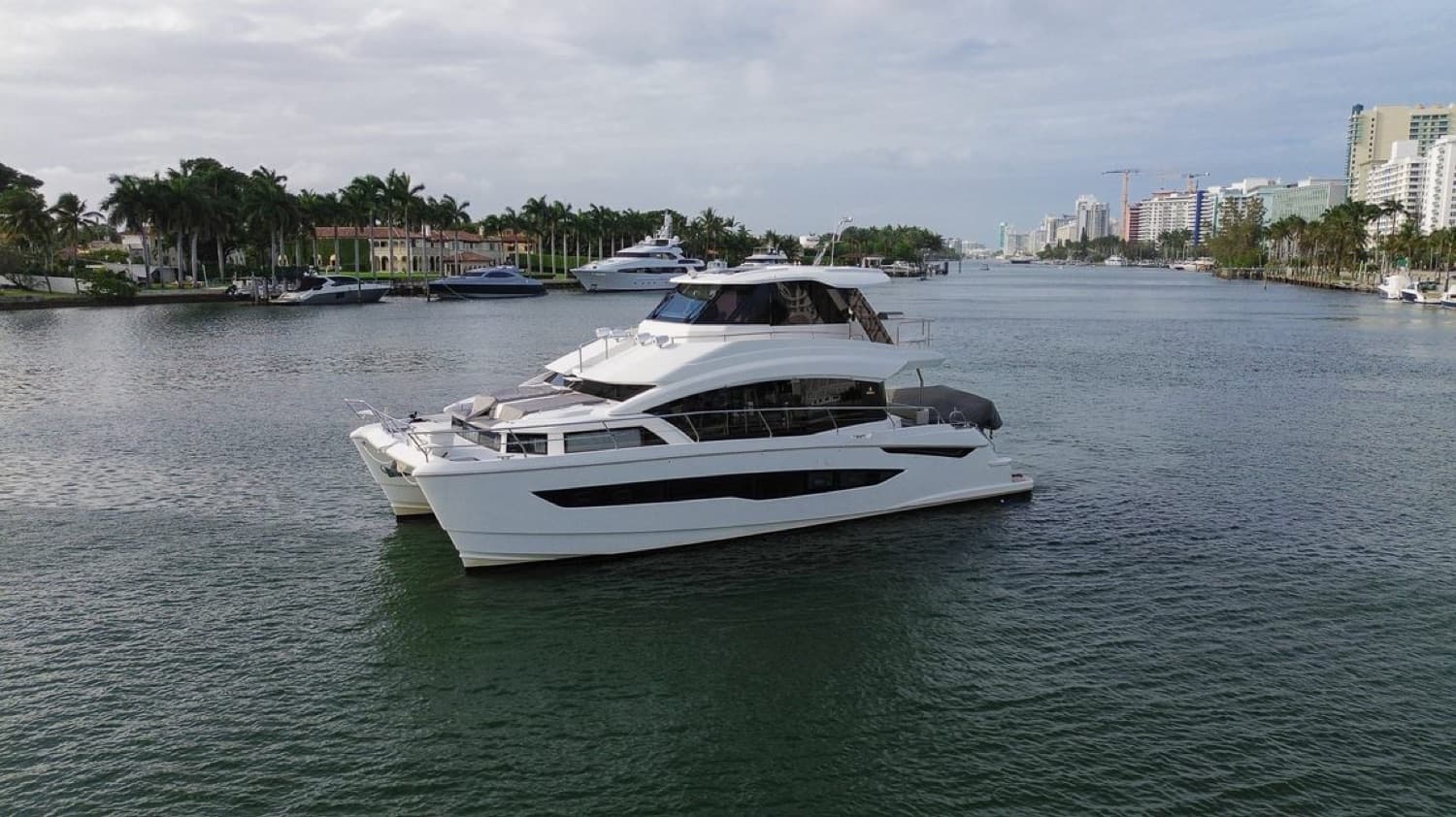
A flagship motor yacht on Biscayne Bay against the Miami skyline
Tokenized Yachts · Real-World Assets Onchain

Anyone can charter a yacht. You can own one. 

Five flagship hulls in Miami and the Bahamas, each tokenized as a real-world asset and issued onchain. Allocations open at $20,000 and run to $1,000,000.

First allocations go to the waitlist, in order. No spam, one email when the first hull opens.

$26.2MFleet under management
5Flagship hulls
$20KOpening allocation
$1MFounding ceiling
Scroll

A flagship yacht is a multi-million-dollar asset that earns only when she sails — and lies at the dock for most of the year. Tokenizing the hull changes who is permitted to own her.

325
days a typical managed yacht sits idle each year. Under a single owner, all 325 are pure cost. Owned by many, the asset finally works for everyone who holds her.
The fleet

Five vessels.
Each one individually owned.

Not a blind pool. Every hull is its own asset, its own company, and its own register of owners — so you choose the yacht, not a basket.

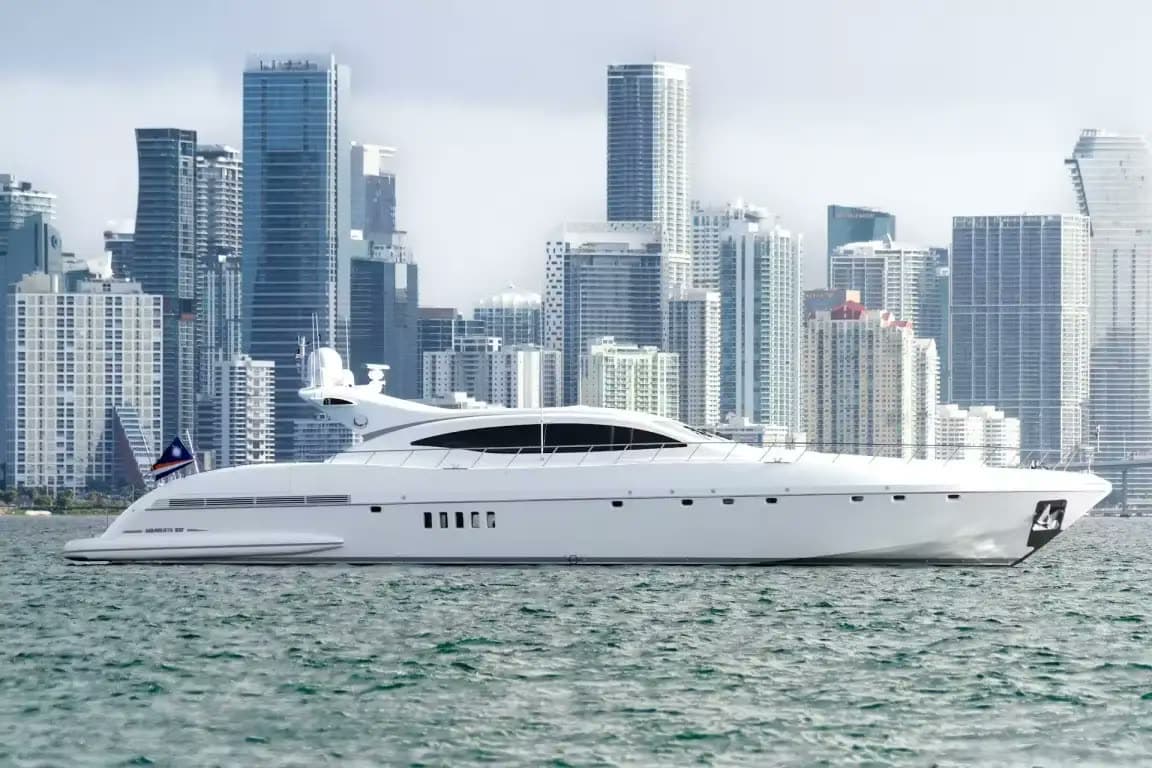
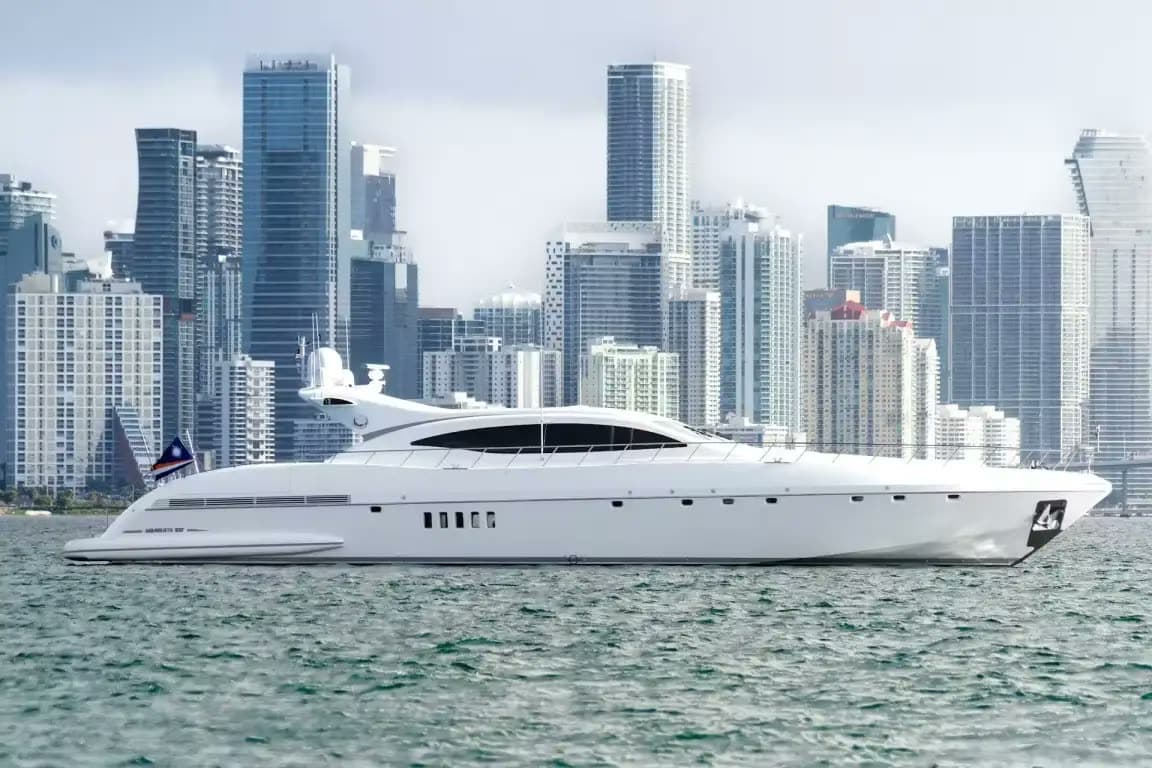
A 108-foot Mangusta open sport yacht underway off Miami
Vessel One

Mangusta 108

An open sport yacht and the flagship of the fleet — the hull that books itself, season after season.

108′Length
12Guests
$8.4MHull value
84,000Fractions
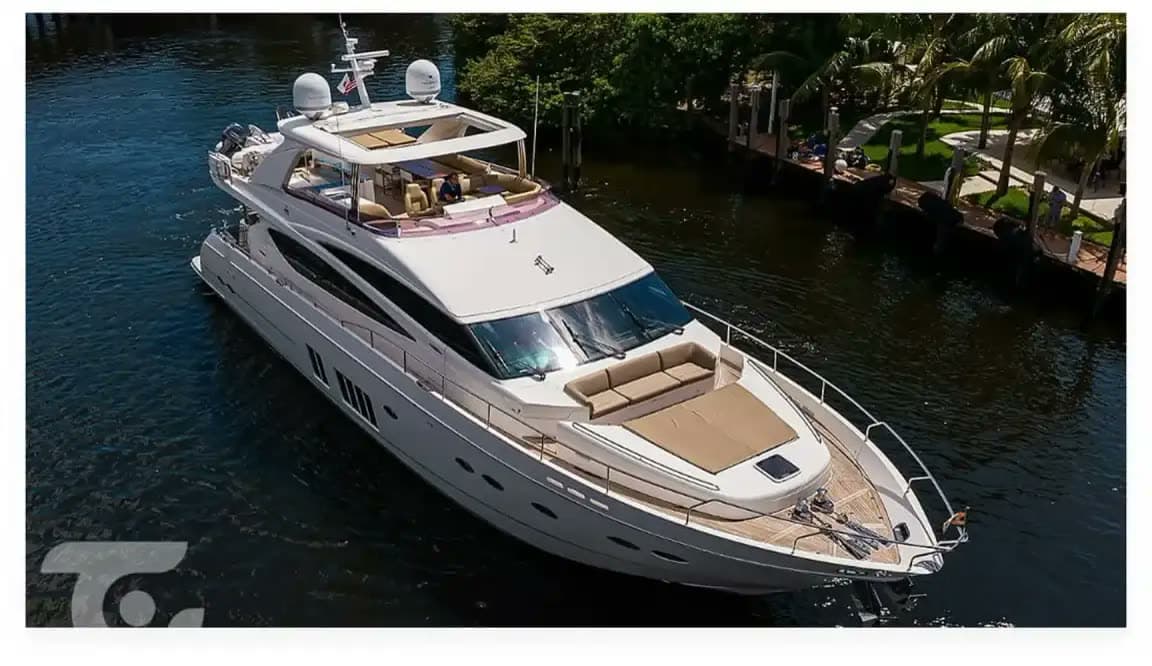
An 85-foot Princess flybridge motor yacht at anchor
Vessel Two

Princess 85

A flybridge motor yacht in the most-requested configuration on the water. Calm, classical, endlessly chartered.

85′Length
10Guests
$5.2MHull value
52,000Fractions
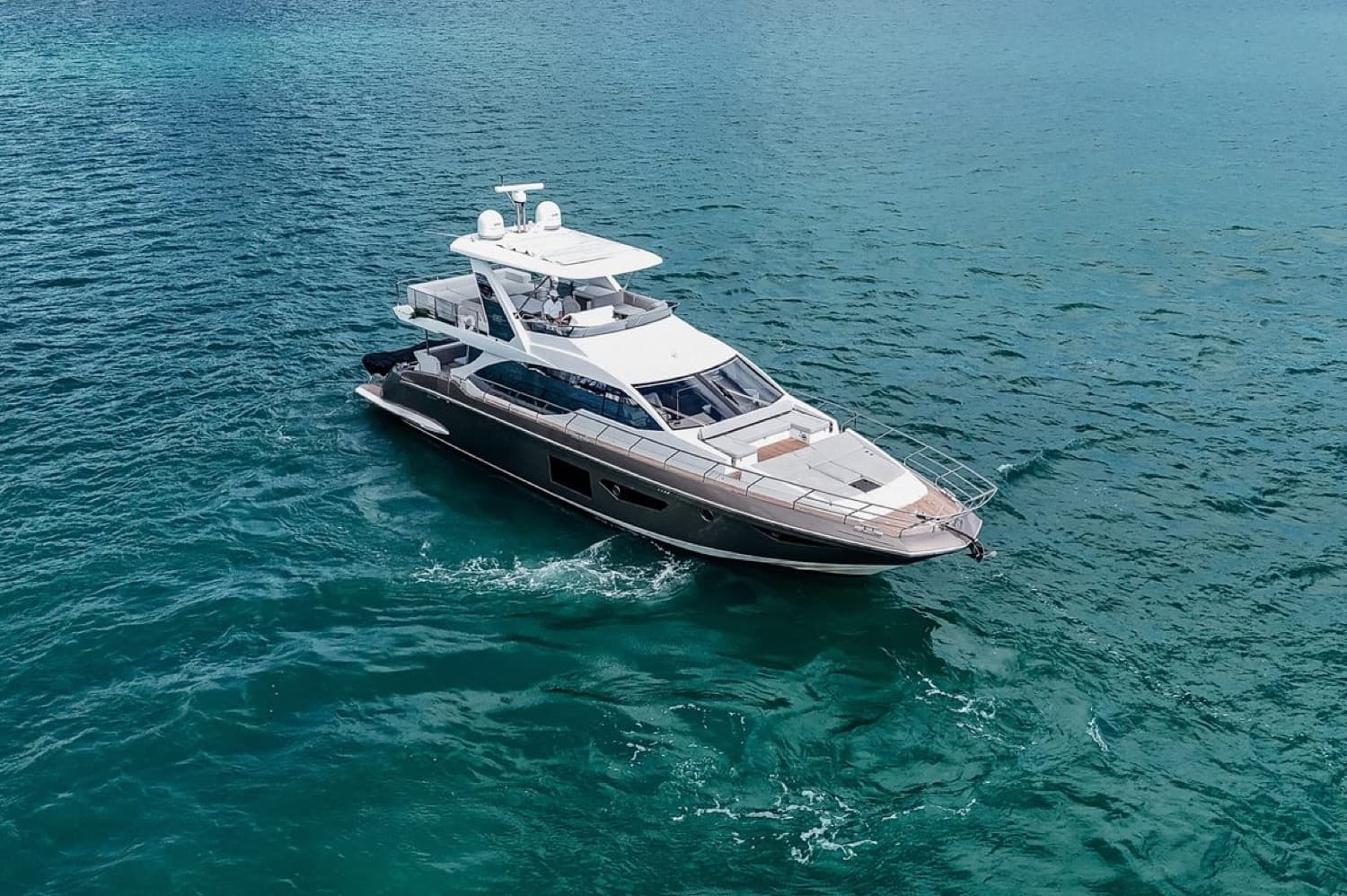
A 78-foot Azimut sport flybridge yacht
Vessel Three

Azimut 78 · “Rumi”

A sport flybridge, and the way most owners come into the fleet. The smallest ticket and the fullest calendar.

78′Length
10Guests
$4.1MHull value
41,000Fractions
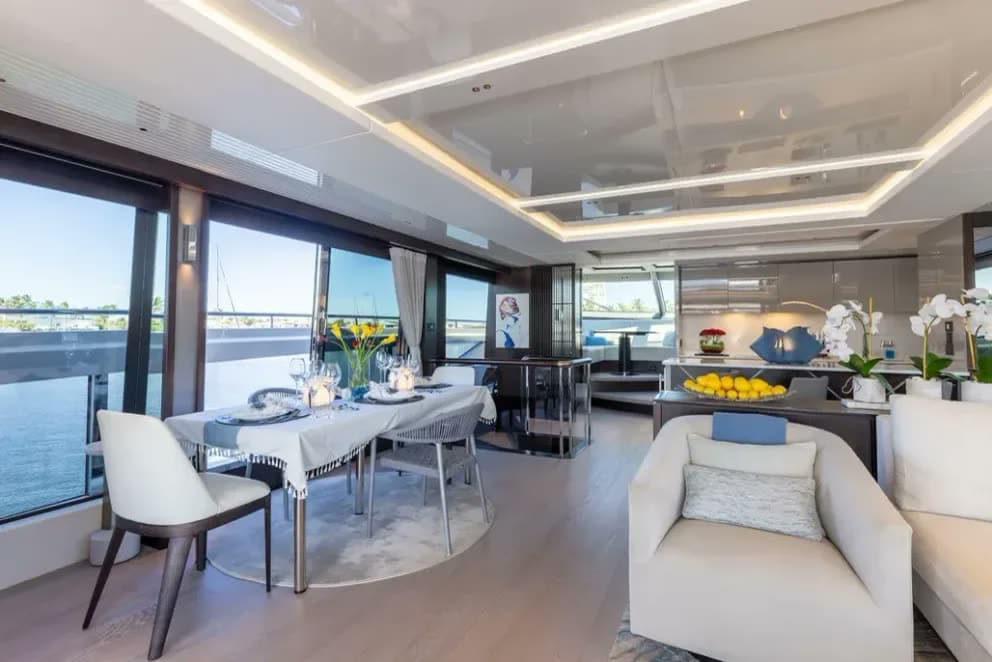
The salon of a 90-foot Sunseeker Ocean yacht
Vessel Four

Sunseeker 90 Ocean

An owner’s-deck flagship built for range. She carries the shoulder seasons when the rest of the fleet rests.

90′Length
12Guests
$6.6MHull value
66,000Fractions
A 54-foot Aquila power catamaran
Vessel Five

Aquila 54

A power catamaran and the fleet’s workhorse — a small ticket, a wide deck, and relentless day-charter turnover.

54′Length
20Guests
$1.9MHull value
19,000Fractions
How ownership works

From a real hull to a share you hold.

Tokenizing an asset only means something if there is a real asset and a real legal claim beneath it. This is the entire chain of custody — nothing skipped, nothing hand-waved.

Every step exists twice: once in law, once in code. The company owns the yacht. The token is your registered share of that company.
One

The vessel

A surveyed, flagged and insured yacht under professional charter management.

Two

The company

She is owned outright by a single dedicated company. One hull, one entity, one register.

Three

The share

Equity in that company is issued onchain as a permissioned token. One token, one share.

Four

The chain

Issued and settled on Robinhood Chain, which in turn settles to Ethereum.

Five

You

The share sits in your wallet. Revenue, days aboard and resale all follow it.

Allocations

Ownership opens at twenty thousand. It runs to a million.

Four bands, one asset. The larger the allocation, the greater your share of the fleet — and the more of the calendar you can claim. Every band is registered equity, settled onchain, and transferable from the day it is issued.

Entry

Berth

$20,000
Allocation from
  • Registered equity in one hull of your choosing
  • Two days aboard each year, at owner rate
  • Quarterly distributions in USDC
  • Transferable from day one

The opening allocation. One hull, one register, full owner rights.

Most takenStandard

Cabin

$100,000
Allocation from
  • Equity across any two hulls in the fleet
  • Ten days aboard each year
  • Calendar priority ahead of Berth
  • Guest transfer of unused days

For owners who want the fleet, not a single boat.

Principal

Owner’s Deck

$350,000
Allocation from
  • Equity across the full five-hull fleet
  • Thirty-five days aboard each year
  • First call on peak-season weeks
  • Direct line to the charter manager

Meaningful ownership, with the calendar to match.

Founding

The Flag

$1,000,000
Allocation from
  • Founding position across the fleet and future hulls
  • One hundred days aboard each year
  • A vote on the next vessel we acquire
  • Name recorded onchain in the founding register

The ceiling. Founding allocations are finite and close first.

Illustrative only. Tier names, thresholds, day allowances and privileges describe a concept structure. They are not an offer, and nothing here is a promise of income or access.

Compose your allocation

Decide how much of her belongs to you.

Choose a hull and move the dial between twenty thousand and one million. Your share of the vessel, your share of what she earns, and the days you may claim aboard her all follow.

$100,000Cabin · 1,000 fractions
$20K$250K$500K$750K$1M
Your share of her
2.44%
of the Azimut 78 hull
Your share of what she earns
$8,700
a year, distributed in USDC
Days aboard
10
claimable each year, at owner rate
Held against
$4.1M
of surveyed, insured hull

Illustrative only. These figures model a concept structure using representative South Florida charter economics. They are not a forecast, an offer, or a promise of return. Charter demand is seasonal, hulls depreciate, and distributions can be zero.

Allocation

Azimut 78 · “Rumi”

TierCabin
Allocation$100,000
Fractions1,000
Issuance fee · 1.5%$1,500
Network costSponsored
Total$101,500

Network fees are sponsored, so you never hold a gas token. Your ownership is written to the company’s register and to the chain in the same transaction.

Days aboard

A yield is pleasant. Standing on her deck is the point.

Most tokenized real-world assets hand you a cash flow and nothing more. A yacht should give you the yacht. Your fractions carry claimable days aboard the specific hull you own — reserved from the wallet that holds them.

Your days scale with your holdingRoughly one day aboard each year per 125 fractions
Reserved from the wallet that holds the shareThe signature is the booking — no broker, no telephone
Days you don’t take return to the charter bookShe keeps earning for every other owner
Owner rate covers crew and fuel onlyYou are not chartering from yourself at retail
MarchIllustrative calendar
S
M
T
W
T
F
S
1
2
3
4
5
6
7
8
9
10
11
12
13
14
15
16
17
18
19
20
21
22
23
24
25
26
27
28
29
30
31
Your daysCharteredOpen
What she earns

The money moves where you can see it.

Charter income lands in the vessel’s own company. Crew, fuel, dockage, insurance, management and the maintenance reserve are paid first — nothing is buried in the split. What remains is distributed to owners in proportion to what they hold, in USDC, on a published schedule.

Model your share
Azimut 78 · “Rumi”One charter week
Charter revenue$70,000
Crew, fuel & dockage−$22,000
Management & brokerage−$14,000
Maintenance reserve−$9,000
To the owners$25,000
Illustrative figures for one representative week, shown to explain the split — not a forecast, a quote, or a promise of return. Actual rates, costs and distributions vary by vessel, season and bookings.
Onchain, precisely

Built to the standards a real asset actually requires.

A real-world asset has to survive distributions, splits, transfer restrictions and audits. Here is exactly how this one is specified — no vague “powered by blockchain.”

01

One hull, one company, one share class

Each vessel sits inside her own special-purpose company, and equity in that company is issued as a permissioned token. Holding it means holding registered equity in the entity that owns the hull — not an IOU, not a synthetic, not a pointer to somebody else’s balance sheet.

One token, one shareAsset-backedRegister mirrored onchain
02

Distributions and splits without a rebase

Corporate actions are applied through a multiplier rather than a rebase, using the scaled-balance extension. Raw balances never move, so every integration stays consistent — and any scheduled change is readable before it takes effect.

It follows that anything displaying your holding must read the scaled balance, balanceOfUI(), and never the raw balanceOf(). Read the raw figure and you silently misreport after every distribution and every split.

ERC-8056 scaled balancesMultiplier, never a rebaseAnnounced in advance
03

Eligibility enforced by the asset itself

Transfers run through a permissioned layer with onchain identity, so only verified and eligible holders can receive a share. The rule is enforced by the contract at the moment of transfer — not by a spreadsheet somebody reconciles on a Friday afternoon.

ERC-3643 permissioned transferOnchain identityAuditable by construction
04

Valued by survey, published by oracle

Each hull is valued by independent marine survey and by her own charter book, and that valuation is published onchain through a price feed read at eight decimals. The published figure already carries the corporate-action multiplier — applying it a second time is the classic integration error, so we do not.

Independent surveyChainlink feed · 8 decimalsMultiplier-aware
05

Why Robinhood Chain

An Arbitrum dedicated chain that settles to Ethereum, with account abstraction and first-come-first-served sequencing — order is arrival time at the sequencer, so nobody can outbid you on gas to get in front of your transaction. Bridging runs over LayerZero, and for owners the network cost is sponsored.

For an asset that distributes on a schedule and must leave a clean audit trail, deterministic and unexciting is precisely the right property.

Chain ID 4663Arbitrum L2 → EthereumERC-4337 accountsFirst-come-first-servedLayerZero bridge
Leaving

The part traditional fractional ownership never solved.

A classic yacht syndicate traps you: to get out, somebody has to buy an entire boat. A share is transferable by construction, so the exit is an instruction rather than a two-year listing.

One

Sell to the market

Quote-driven routing gathers competing bids, so a larger holding clears at a single price.

Two

Sell instantly

Standing onchain pools hold each vessel’s shares against USDC, so a small holding can always exit at a transparent price.

Three

Name your price

Post a limit and wait. First-come-first-served sequencing means nobody pays their way ahead of you in the queue.

Four

Or she is sold

If the hull herself is sold, proceeds are distributed to owners in proportion and the shares are retired.

Coming aboard

Own a piece of her the way you already buy anything.

No exchange account to open, no seed phrase to lose, no gas token to source. Verify once, pay by the method you already use, and your ownership is written to the company register and to the chain in a single transaction.

Verify onceA reusable onchain credential, good across every vessel in the fleet
Pay in dollarsCard, bank transfer or USDC — settlement is USDC either way
A wallet is prepared for youA smart account, network cost sponsored, self-custody whenever you want it
Ownership recorded immediatelyCompany register and chain state written in the same transaction
Vessel Three
Azimut 78 · “Rumi”
Tokenized vessel equity
Price per fraction$100.00
Your fractions250
Your share of her0.61%
Days aboard2 / year
Confirm ownership
Concept preview · illustrative
Network cost sponsored
Why it holds up

Real yachts. A real operator. A model that already works.

RESIDENCE is built on a working luxury fleet and a charter operation South Florida already knows — not a render, and not a roadmap. The vessels exist, the charter book exists, and the revenue is the same revenue that pays for them today.

Tokenized real-world assets are not theory either. Onchain property and credit vehicles already distribute rental and revenue income to their holders. Applying that to a hull is the straightforward part; doing it with a real company, real eligibility rules and real days aboard is the part most people skip.

Residence Yacht Club featured in Ocean Drive magazine
As featured · Ocean Drive · “Anchors Aweigh”
In plain terms

We are opening a waitlist, not promising returns.

A tokenized share of charter revenue is, in most jurisdictions, a regulated financial interest — so we treat it as one. Joining the waitlist registers your interest and nothing more. It is not a purchase, not a guarantee of income, and any actual offering will be made only through proper documentation, to eligible participants, where the law allows.

What it is

Registered equity in the company that owns one specific hull, issued onchain.

What it is not

Not a deposit, not a fund unit, and not a claim on any other vessel or on RESIDENCE itself.

What can go wrong

Charter demand falls, a hull is damaged or off-hire, costs rise, distributions reach zero, hull value declines.

What we won’t do

Promise a yield, quote a return, or take money before the documentation is real.

Tokenized vessel equity

Own the hull, not the brochure.

The first hull goes onchain to the waitlist first, in order. Leave your email and we will write to you once — when it opens.

One email when the first hull opens. Nothing else, ever.